
- Content Bloom rebuilt the Mediju Tilts website around one brand with two directions, PR and IMPACT (public affairs), and designed it for AI discoverability from the start.
- We planned Latvian and English as two full versions of the site from the start, each with its own logo, header and footer.
- The site puts the consultants’ expertise first, with articles signed by named experts and a structure that people, search engines and AI assistants can read easily.
Content Bloom, the team that designed and built this website, wrote this article. It explains how we approached the project, how we built the site for AI discoverability and what we expect it to change for Mediju Tilts and its clients.
Mediju Tilts has worked in strategic communication in the Baltics since 1996. An agency with that history rarely lacks content. What it often lacks is a website that shows clearly what the agency does today, who does it and why a client should call. That was the starting point of the rebuild.
Key facts about the project
- Client: Mediju Tilts, a strategic communication and public affairs agency in Riga, Latvia, founded in 1996 and a PROI Worldwide partner.
- Built by: Content Bloom, Riga.
- Scope: positioning, information architecture, design system, copy structure, technical build, SEO and AI-search readiness.
- Directions: PR (reputation, media relations, digital communication, events, media training) and Mediju Tilts | IMPACT (public affairs and interest representation).
- Languages: Latvian and English, as two complete versions.
- Platform: WordPress with the Salient theme, WPBakery Page Builder, Polylang for languages and All in One SEO Pro for search and structured data.
- Year: 2026.

“If we do everything on our own, the result is weak and barely visible. Meaningful collaborations are what matter. The value Mediju Tilts brings is its expertise in PR and IMPACT: thirty years of experience that lets the team anticipate the twists and turns ahead. This industry changes by the hour, so adapting to what is new is part of the daily routine.”
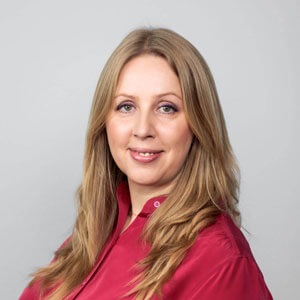
Ieva Markus, Content Bloom
Starting with positioning, not pages
Before any design work, we agreed on one principle: Mediju Tilts is one brand with two directions. PR covers reputation, media relations and visibility. IMPACT covers public affairs: representing interests in policy and regulatory processes. These are not two companies, and the site should never make them look like two.
Even so, the directions need different voices. For example, the PR side keeps a confident, media-forward look on a dark background. By contrast, the IMPACT pages use a calmer, advisory register: a light header, more white space, restrained motion and their own Mediju Tilts | IMPACT logo. A visitor from a ministry or an industry association should feel they have reached a serious advisor, while a marketing director should see an agency that knows how to get attention.
Two languages, built as two full versions
A Riga agency serves Latvian clients first. However, international partners and networks such as PROI Worldwide read in English. For that reason, we did not translate the site at the end of the project. We built the Latvian and English versions as equals from the first day:
- every page, menu, call to action and contact section exists in both languages;
- the header and footer show a logo with a tagline in the visitor’s language;
- each language has its own footer and contact block, so an update is made once per language and appears everywhere;
- the Latvian copy addresses visitors with the polite “jūs” throughout, in line with how the agency talks to clients.
Two complete language versions also support AI discoverability, because AI assistants often answer in the language of the question.
A design system the team can maintain
An agency website lives for years, and busy people usually update it. We chose a setup that keeps everyday edits simple. The site runs on WordPress with the Salient theme and the WPBakery page builder. The team manages fonts, the header and the main menu in the theme settings rather than in custom code. Colours, spacing and components follow one shared design system, so new pages look consistent without extra design work. In addition, a predictable page structure helps AI discoverability: search engines and AI tools find the same kind of information in the same place on every page.
Similarly, typography follows the brand’s established Futura-style lettering. For this reason, we used League Spartan, an openly licensed typeface close to that look, which also supports every Latvian character (ā, ē, ģ, ķ, ļ, ņ, š, ž and the rest).
Making expertise visible for AI discoverability
Today, clients increasingly meet an agency through a search result or an answer from an AI assistant before they open its website. We built the content side with this in mind:
- Named experts. Mediju Tilts consultants write and sign the expert articles themselves, so readers and search engines can see who stands behind the advice.
- Clear structure. Articles open with a short summary, use descriptive headings and end with frequently asked questions. People can scan them, and AI tools can quote them accurately.
- Structured data. The site’s SEO setup describes the organisation, its services and its authors in a machine-readable form.
- Consistent facts. Names, services and contact details are the same across pages and languages, so no source contradicts another.
What AI discoverability means for an agency website
AI discoverability (also called generative engine optimisation, GEO) is how easily AI assistants such as ChatGPT, Perplexity, Gemini and Google AI Overviews can find a company, understand what it does and cite it in their answers. In other words, classic SEO helps a page rank in a list of links. AI discoverability helps a company be named in the answer itself.
For a communications agency, this matters twice. Prospective clients ask AI tools questions like “which PR agency in Latvia handles crisis communication” or “how do companies take part in public consultations”. For example, if the agency’s own experts have published clear, signed answers, AI tools can cite those answers, and the agency becomes part of the conversation before the first call.
| Classic SEO | AI discoverability | |
|---|---|---|
| Goal | Rank a page in search results | Be cited or named in an AI answer |
| What counts most | Keywords, links, technical health | Clear answers, named experts, consistent facts, structured data |
| Typical format | Long pages optimised for a keyword | Short summaries, direct answers, FAQs, defined terms |
| Proof of success | Positions and clicks | Mentions and citations in AI tools, plus the enquiries they lead to |
How the site is built to be cited
- Answer first. Every expert article opens with a short “In short” summary that states the answer before the detail.
- Named, verifiable authors. Articles such as How to choose a PR agency carry the name of a Mediju Tilts consultant with their own bio page, so AI tools can connect advice to real people with real experience.
- One page per topic. Each service (strategic communication, digital communication, events, media training and IMPACT) has its own page with a clear heading, a plain description and frequently asked questions.
- Consistent entity facts. The agency’s name, address, phone numbers, founding year and network membership are identical on every page and in both languages.
- Structured data. Machine-readable markup describes the organisation, its services, its people, its FAQs and its breadcrumbs as structured data that machines read directly.
- Readable by machines. Important text is real HTML, not text inside images or hidden behind scripts, and the pages load fast.
- Two languages, linked correctly. Latvian and English versions point to each other, so AI tools can answer in the language of the question.
Details that build trust
In the end, many small decisions add up: real photographs of the people clients will work with, a contact section on every page, a map of the agency’s Baltic reach on the homepage, and calls to action that lead to one clear next step. However, none of this is decoration. Instead, each detail answers a question a potential client has before they get in touch.
Expected impact on visibility and AI discoverability
However, we avoid promising numbers before a site has been live long enough to measure. Instead, we can say what we designed the rebuild to do:
- help visitors find the right direction, PR or IMPACT, in a few seconds;
- give Latvian and English audiences the same quality of information;
- make the consultants’ expertise easier to find, cite and trust, including in AI search;
- let the Mediju Tilts team keep the site current without a developer for every change.
After launch, therefore, we will review search visibility, enquiries and how visitors move between the two directions, and adjust the site based on what the data shows.
Five lessons for other professional-services firms
- Decide what you want to be known for before you design. AI tools repeat what is clear and consistent. A vague positioning produces vague answers.
- Let your experts speak under their own names. Expertise that is signed, dated and specific is far more likely to be cited than anonymous company copy.
- Write the answer, then the explanation. A two-sentence summary at the top of each page is the part most likely to be quoted.
- Keep your facts identical everywhere. Different addresses, years or job titles across pages and profiles make AI tools less confident about you.
- Treat the website as a product, not a project. Search and AI tools change monthly, so the team needs a site it can update without a developer.
Frequently asked questions
Who built the Mediju Tilts website?
The website was technically built and implemented by Content Bloom, a Riga-based team working on strategy, brand, web, SEO and content. We look forward to seeing the impact on conversions, visibility and AI discoverability, because the expertise of this PR agency deserves to be cited.
Why does the IMPACT section look different from the rest of the site?
IMPACT is the agency’s public affairs direction. Its audience expects the tone of an advisory firm, so these pages use a calmer, more formal design while staying part of the same Mediju Tilts brand.
Is the site available in English?
Yes. Every page is available in Latvian and English, with language-specific navigation, logos and contact sections.
What is AI discoverability?
AI discoverability is how easily AI assistants such as ChatGPT, Perplexity, Gemini and Google AI Overviews can find a company, understand it and cite it in their answers. It builds on SEO but puts more weight on clear answers, named experts, consistent facts and structured data.
How can a PR agency get cited by AI assistants?
By publishing clear, expert answers to the questions clients actually ask, signed by named consultants, structured with summaries and FAQs, and supported by consistent company facts and schema markup across the whole website.
Does structured data help with AI search?
Structured data does not guarantee citations, but it removes guesswork. It tells search engines and AI tools exactly who the organisation is, what it offers and who its experts are.
How long does it take to see results in AI search?
There is no fixed timeline. Search engines first need to crawl and index new content, which can take weeks, and AI tools update their sources at different speeds. Mediju Tilts and Content Bloom will review visibility, citations and enquiries regularly after launch.
What services does Mediju Tilts offer?
Strategic and corporate communication, digital communication, events, media training and, through Mediju Tilts | IMPACT, public affairs and interest representation in Latvia and the Baltics.
What is the difference between SEO and GEO?
SEO (search engine optimisation) helps a page rank in search results. GEO (generative engine optimisation) helps a company be understood and cited by AI assistants that write answers instead of listing links. In practice, good GEO starts with good SEO: crawlable pages, fast loading and clear structure.
What is E-E-A-T and why does it matter for expert content?
E-E-A-T stands for experience, expertise, authoritativeness and trustworthiness. It describes the signals search engines use to judge whether advice comes from a credible source. Named authors with real experience, clear bios and consistent company facts are among the strongest of those signals.
Which structured data does an agency website need?
At minimum: Organization (or LocalBusiness) with name, address and contact details, Person for each expert author, Service for each service page, Article for expert posts, FAQPage for question-and-answer sections and BreadcrumbList for navigation.
Can AI search replace PR?
No. AI assistants repeat what credible sources say about a company: media coverage, expert articles, reviews and official information. Because PR creates and shapes those sources, it becomes more important, not less, when people search through AI.
How do you measure AI discoverability?
By regularly asking AI assistants the questions clients ask and recording whether the company is mentioned or cited, by tracking visits that come from AI tools such as ChatGPT, Perplexity and Gemini, and by watching branded search and the enquiries that follow.
Why does a Latvian agency need an English website?
International clients, partners and networks such as PROI Worldwide research in English, and AI assistants often answer in the language of the question. A complete English version lets the agency’s expertise be found and cited outside Latvia too.
Why was WordPress chosen for the Mediju Tilts website?
WordPress lets the Mediju Tilts team update pages, articles and experts themselves, supports two languages and mature SEO tools, and is widely supported, so the site does not depend on a single developer.
What is public affairs?
Public affairs is the work of helping organisations take part in policy and regulatory decisions openly and effectively, through government relations, interest representation and stakeholder dialogue. At Mediju Tilts this direction is called Mediju Tilts | IMPACT.
Who is Content Bloom?
Content Bloom is a Riga-based team working on strategy and positioning, brand and design, web, SEO and content, and AI workflows for service companies. It designed and built the Mediju Tilts website.
Explore Mediju Tilts | IMPACT or contact the team.
Last updated: 23 October 2026.